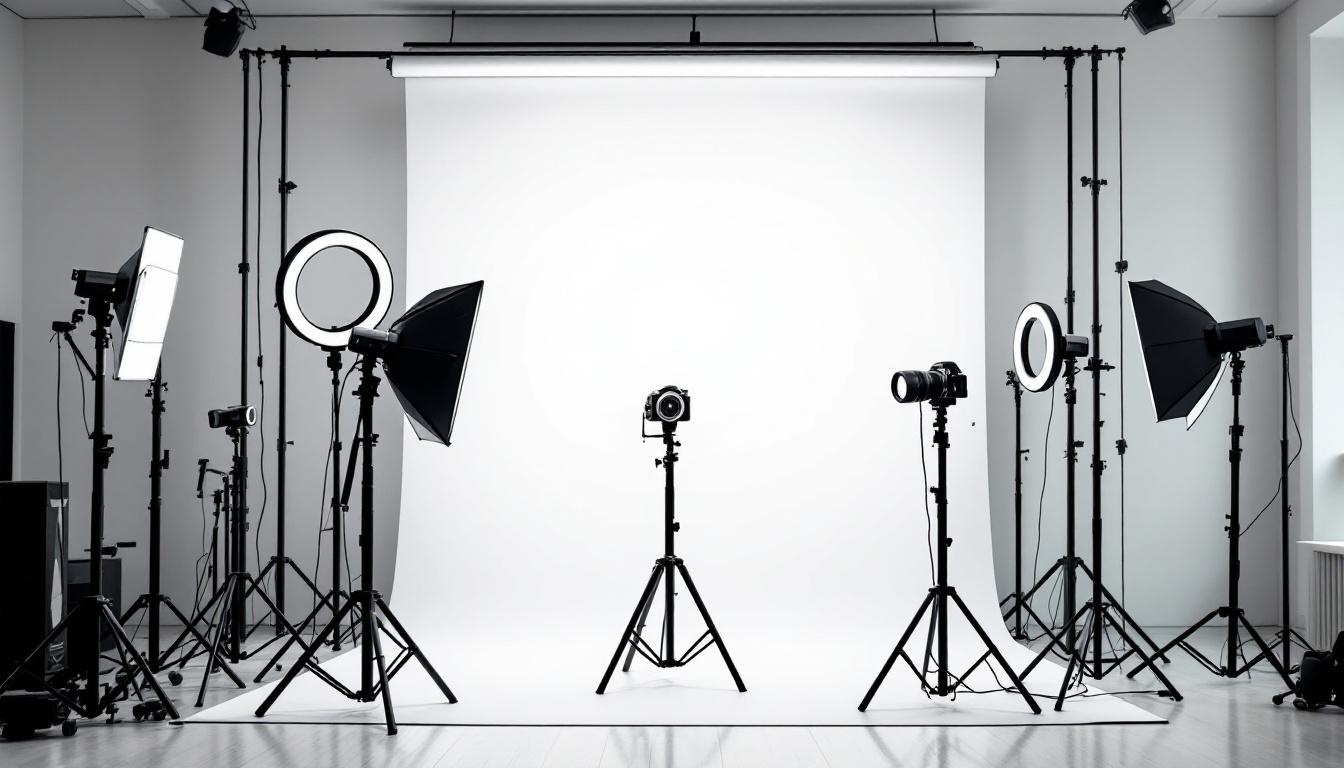
The 18-inch ring light sitting in thousands of portrait studios across the country is fundamentally too small for quality portraiture. Despite being the most purchased size category, these popular units create harsh shadow transitions and inadequate light wraparound that compromise image quality in ways most photographers never recognize.
This sizing problem stems from a fundamental misunderstanding of how light physics interact with portrait distances. When a ring light’s diameter falls below a critical threshold relative to shooting distance, the quality of shadow gradation deteriorates rapidly, creating the telltale signs of amateur ring light work: harsh shadow edges, poor catchlight-to-pupil ratios, and unflattering facial modeling.
The Physics Behind Ring Light Effectiveness
Ring light performance depends entirely on the relationship between light source diameter and subject distance. The critical measurement is the angular size of the light source as seen from the subject’s position. A 14-inch ring light positioned four feet from a subject subtends approximately 18 degrees of angle, while a 20-inch light at the same distance covers 26 degrees.
This angular difference creates dramatic changes in light quality. Smaller angular light sources produce harder shadow transitions because they approximate point sources more closely. The shadow penumbra (the gradual transition zone between full shadow and full light) becomes narrower, creating the harsh edges that mark inferior ring light work.
Testing conducted by the Rochester Institute of Technology’s School for Photographic Arts and Sciences demonstrates that ring lights smaller than 20 inches produce measurably harsher shadow gradients when used at typical portrait working distances of 3-6 feet. The difference becomes particularly pronounced in facial modeling around the nose, chin, and eye sockets.
Why Small Ring Lights Dominate the Market
The prevalence of 14-18 inch ring lights reflects market forces rather than optical requirements. These sizes hit the sweet spot for manufacturing costs, shipping expenses, and perceived portability. A 14-inch ring light ships in standard packaging, mounts on lightweight stands, and carries a price point that seems reasonable to photographers comparing equipment costs.
Social media influence compounds this problem. YouTube creators and Instagram photographers often work at closer distances where smaller ring lights can function adequately. Their audience sees the equipment and assumes it will work equally well for traditional portrait distances. The result is widespread adoption of inadequate lighting tools.
Additionally, many photographers choose ring light size based on the wrong criteria. Portability, stand compatibility, and initial cost take precedence over the fundamental question: what diameter produces the best light quality at my typical shooting distance?
The 20-Inch Threshold
Professional lighting analysis shows that 20 inches represents a critical threshold for ring light effectiveness in portrait work. At this diameter, several important optical changes occur:
The angular coverage at 4-foot working distance reaches approximately 26 degrees, providing sufficient light wraparound for natural facial modeling. Shadow transitions become gradual enough to appear natural rather than artificially harsh. Catchlight size reaches optimal proportions relative to pupil diameter, typically spanning 15-20% of the iris for flattering eye presentation.
More importantly, 20-inch and larger ring lights maintain their light quality advantages even when photographers need to work at greater distances. A 20-inch light at 5 feet still provides better modeling than an 18-inch light at 4 feet, giving photographers more flexibility in their shooting positions.
Practical Considerations for Larger Ring Lights
Moving to 20-24 inch ring lights requires addressing several practical challenges. Weight increases significantly, demanding more robust light stands and potentially limiting location portability. Power requirements often increase, though LED efficiency improvements in recent generations have minimized this concern.
Mounting systems become more critical with larger ring lights. The standard lightweight stands that work adequately for 14-18 inch units may prove inadequate for larger diameters, especially when adding camera mounting weight. Professional photographers typically need to budget for upgraded support systems alongside the larger light itself.
However, these practical challenges pale compared to the image quality improvements. Photographers who make the transition to properly sized ring lights consistently report better client reactions and more professional-looking results. The investment in larger equipment pays dividends in improved work quality.
Optimal Ring Light Sizing Formula
Professional lighting designers use a simple formula to determine optimal ring light diameter: the light source should subtend at least 25-30 degrees of angle from the subject position for quality portrait work. This translates into specific diameter requirements at common working distances.
At 3 feet working distance, minimum diameter should be 18 inches, with 22 inches providing optimal results. At 4 feet, 20 inches becomes the minimum threshold, with 24+ inches delivering professional quality. At 5 feet working distance, anything smaller than 22 inches compromises light quality noticeably.
These measurements assume the photographer wants professional-quality shadow gradation and facial modeling. Photographers willing to accept harsher lighting for creative effect or extreme portability can work with smaller diameters, but they should understand they’re making a conscious quality compromise.
Department of Energy LED efficiency research shows that larger ring lights can achieve the same power consumption as smaller units through improved LED technology, eliminating the historical power penalty for proper sizing.
Beyond Diameter: Other Critical Factors
Ring light diameter represents only one factor in lighting quality, though arguably the most important one. LED density within the ring affects light evenness and intensity. Cheaper large ring lights sometimes spread too few LEDs across their circumference, creating visible hot spots or uneven illumination.
Color temperature consistency matters significantly in professional work. Higher-quality ring lights maintain consistent color across their entire circumference and throughout their dimming range. This consistency becomes more challenging to maintain in larger diameters, explaining some of the cost premium for quality large ring lights.
Diffusion quality varies dramatically between manufacturers and price points. Some ring lights include removable diffusion panels, while others rely on built-in diffusion that may prove inadequate for professional work. High Resolution vs Speed: Camera Body Selection for Different Photography Demands The diffusion system often determines whether a properly sized ring light delivers professional results or simply produces a larger version of the same harsh lighting problems.
Making the Equipment Investment Decision
Photographers facing ring light purchase decisions should prioritize diameter over other features when budget requires compromises. A basic 20-22 inch ring light with adequate build quality will produce better portrait lighting than an feature-rich 18-inch unit costing the same amount.
For photographers currently using smaller ring lights, the upgrade path depends on their typical shooting scenarios. Those working consistently at 4+ foot distances will see immediate improvement from larger diameter lights. Photographers shooting primarily at closer distances may find their current equipment adequate but should consider larger units for the additional working distance flexibility they provide.
The cost difference between adequate and optimal ring light sizing often amounts to $100-200 in professional equipment categories. This investment typically pays for itself through improved client satisfaction and the ability to command higher rates for superior lighting quality.
Budget-conscious photographers might consider buying used professional equipment rather than new consumer-grade smaller units. A used 22-inch professional ring light often costs less than a new 18-inch consumer model while delivering substantially better performance.
- Ring light effectiveness depends on angular size relative to shooting distance, not just diameter
- 20 inches represents the minimum diameter for professional portrait quality at typical working distances
- Popular 14-18 inch ring lights create harsh shadows and poor catchlight ratios that compromise image quality
- Larger ring lights require upgraded stands and mounting but deliver substantially better results
- The formula for optimal sizing: light should subtend 25-30 degrees angle from subject position
- Diameter should be prioritized over features when making equipment decisions