Your camera’s flash sync speed isn’t a suggestion. It’s a hard mechanical limit that will destroy your real estate photos if you ignore it. Yet I’ve watched countless photographers discover this the hard way, mid-shoot, with clients waiting and black bands slicing through every frame.
I’ve seen too many photographers learn about sync speed limitations at the worst possible moment, usually when they’re under pressure on a paying job. The physics of focal plane shutters don’t care about your deadline or your client’s expectations.
Flash sync speed determines the fastest shutter speed you can use while maintaining full flash coverage across your entire image. Exceed it, and your camera’s focal plane shutter literally blocks part of the flash from reaching your sensor. In real estate photography, where balancing ambient window light with interior flash is critical, understanding this limitation separates usable photos from expensive reshoot disasters.
The Sync Speed Trap: When Fast Shutter Speeds Backfire
Most real estate photographers encounter sync speed problems the same way: they’re shooting a bright living room with large windows, trying to balance the outdoor exposure with interior flash. The natural instinct is to increase shutter speed to control the bright ambient light streaming through those windows.
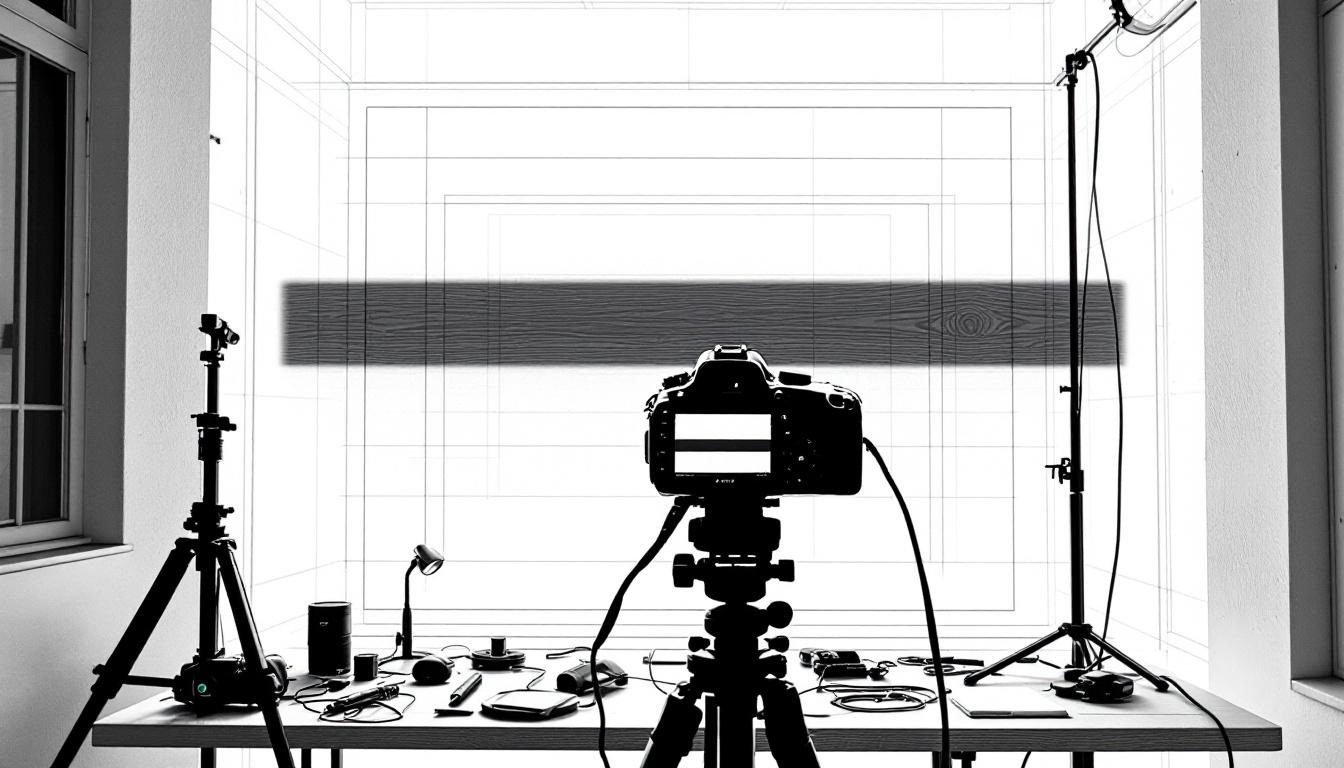
Here’s what actually happens. You bump your shutter speed from 1/125s to 1/250s, thinking you’re controlling window exposure. Instead, you create a horizontal black band across the bottom or top of every frame. That band represents the portion of your image where the focal plane shutter blocked the flash entirely.
The mechanical reality is unforgiving. Your camera’s focal plane shutter uses two curtains that sweep across the sensor. At sync speed and slower, the first curtain fully opens, the flash fires with the entire sensor exposed, then the second curtain closes. At speeds faster than sync speed, the second curtain starts moving before the first curtain finishes, creating a traveling slit of exposure. The flash duration (typically 1/1000s to 1/10000s) is much shorter than this slit’s travel time, so only the portion of the sensor exposed when the flash fires receives any flash illumination.
Understanding sync speed isn’t just technical knowledge, it’s survival knowledge for working photographers. When you exceed your camera’s sync speed, you’re not getting a slightly degraded image, you’re getting a fundamentally broken photograph that no amount of post-processing can fix.
I’ve seen this mistake cost photographers entire shoots. You don’t notice the problem immediately because your camera’s LCD shows the combined ambient and flash exposure. The black bands only become obvious during post-processing, when it’s too late to reshoot.
Why Real Estate Photography Makes Sync Speed Critical

Portrait photographers can often work entirely within sync speed limitations because they control their lighting environment. Real estate photographers don’t have that luxury. You’re constantly balancing fixed ambient light (windows, existing fixtures) with your flash output, and that balance requires precise exposure control.
Consider a typical real estate scenario: a kitchen with a large window showing a bright backyard. Your ambient exposure needs might call for 1/200s at f/8 to prevent the window from blowing out completely. But if your camera’s sync speed is 1/180s, you’re forced to choose between properly exposed windows (and black banded flash coverage) or properly lit interiors (with blown windows).
This is where camera choice becomes critical for real estate work. A Canon 5D Mark IV syncs at 1/200s, while a Canon 1DX Mark III syncs at 1/300s. That 2/3 stop difference in maximum shutter speed directly translates to your ability to control ambient exposure while maintaining full flash coverage.
The sync speed limitation affects more than just exposure balance. It impacts your depth of field options, your ability to freeze motion (ceiling fans, curtains moving in HVAC airflow), and your flash power requirements. Working within sync speed often means using wider apertures than you’d prefer, requiring more precise focus and potentially limiting your depth of field through entire rooms.
The High Speed Sync Compromise
High Speed Sync (HSS) appears to solve the sync speed problem by allowing flash use at any shutter speed. The reality is more complicated, and the tradeoffs are substantial.
HSS works by rapidly pulsing the flash throughout the entire shutter curtain travel time, essentially creating a continuous light source instead of a brief burst. This allows flash coverage at any shutter speed but reduces effective flash power significantly. Instead of one powerful burst, you get many weaker pulses spread over time.
The power reduction isn’t trivial. Depending on how far you exceed native sync speed, HSS can reduce your effective flash output by 2-4 stops. In practical terms, a flash that could adequately light a large living room at 1/4 power might need to run at full power in HSS mode, with noticeably longer recycle times and shorter battery life.
For real estate photography, this power reduction creates a cascading problem. Large rooms require significant flash output to achieve even lighting. HSS forces you to either move lights closer (changing the light quality and potentially creating more obvious shadows) or add more lights to compensate for the power loss.
There’s also a quality consideration. HSS changes the flash duration characteristics, potentially affecting motion stopping ability and creating different shadow qualities compared to traditional sync flash. While these differences are often subtle, they can impact the consistent look across a property shoot.
When HSS Makes Sense
HSS isn’t inherently bad for real estate work, but it requires conscious tradeoffs. Use HSS when window exposure control is more important than maximum flash efficiency, when you have sufficient flash power to compensate for the reduction, or when shooting smaller spaces where the power loss is manageable.
Avoid HSS when working with minimal flash equipment, when battery life is critical (long shoot days), or when you need maximum light output for large spaces. The power reduction and increased recycle times can slow your shooting pace significantly.
Camera Body Selection for Real Estate Flash Work
Sync speed varies dramatically between camera bodies, and this specification should influence real estate photographers’ equipment decisions. The difference between 1/160s and 1/300s sync speed represents over one full stop of ambient control flexibility.
Professional camera bodies generally offer faster sync speeds than consumer models. The Canon 1DX Mark III specification shows 1/300s sync speed, while entry-level bodies often max out at 1/180s or 1/200s.
Mirrorless cameras present an interesting development in sync speed capabilities. Some models offer electronic first curtain or fully electronic shutters that can change sync speed characteristics, though these modes may introduce their own limitations with flash photography.
Beyond the headline sync speed number, consider sync speed consistency across different shooting modes. Some cameras reduce sync speed when using certain autofocus modes, silent shooting modes, or electronic viewfinder configurations. Test your specific camera and flash combination in your typical shooting modes to verify actual sync performance.
Practical Sync Speed Management Strategies
Working effectively within sync speed limitations requires adjusting your entire exposure approach, not just accommodating a single camera setting.
Start with ambient exposure assessment before adding flash. Determine what shutter speed you need for acceptable window exposure, then check if that speed exceeds your sync limit. If you’re within sync speed, proceed normally. If you’re beyond sync speed, you need to adjust your approach before adding flash to the equation.
Aperture becomes your primary ambient control tool when shutter speed is sync-limited. Instead of increasing shutter speed to darken windows, use smaller apertures. This affects depth of field through rooms, requiring more precise focus, but maintains full flash coverage capability.
Flash power and positioning become more critical when you can’t use shutter speed for ambient control. You may need more powerful strobes or closer positioning to achieve the same flash-to-ambient ratios you could get with faster shutter speeds.
for more details on flash positioning strategies that work within sync speed limitations.
Consider graduated neutral density filters for extreme window exposure situations. A grad ND can reduce window brightness by 2-3 stops while maintaining normal exposure on interior elements, reducing your reliance on fast shutter speeds for ambient control.
Testing and Verifying Your Sync Speed Setup
Camera manufacturers’ sync speed specifications don’t always tell the complete story. Real-world sync performance can vary based on flash type, camera settings, and even individual camera tolerances.
Test your actual sync speed by shooting a series at incrementally faster shutter speeds with flash. Start at the manufacturer’s rated sync speed and increase in 1/3 stop increments. Look for the first signs of uneven coverage or dark banding, which indicates you’ve exceeded practical sync speed.
Some cameras and flashes allow slight sync speed tolerance beyond the rated specification. You might find usable results 1/3 stop faster than the official rating, though this varies by equipment and isn’t guaranteed to remain consistent.
Test with your actual shooting scenarios, not just controlled setups. Camera temperature, battery level, and flash recycle status can all affect sync performance. What works in air conditioning might fail during summer exterior shoots.
- Flash sync speed is a hard mechanical limit that creates unusable black bands when exceeded, not a flexible creative setting
- Real estate photography’s need for ambient/flash balance makes sync speed critical for window exposure control without artifacts
- Camera bodies vary significantly in sync speed (1/180s to 1/300s), directly impacting your lighting capability and should influence equipment selection
- High Speed Sync reduces flash power by 2-4 stops, requiring more lights or closer positioning in large spaces
- Test your actual sync speed with your specific equipment combination, as real-world performance can vary from manufacturer specifications