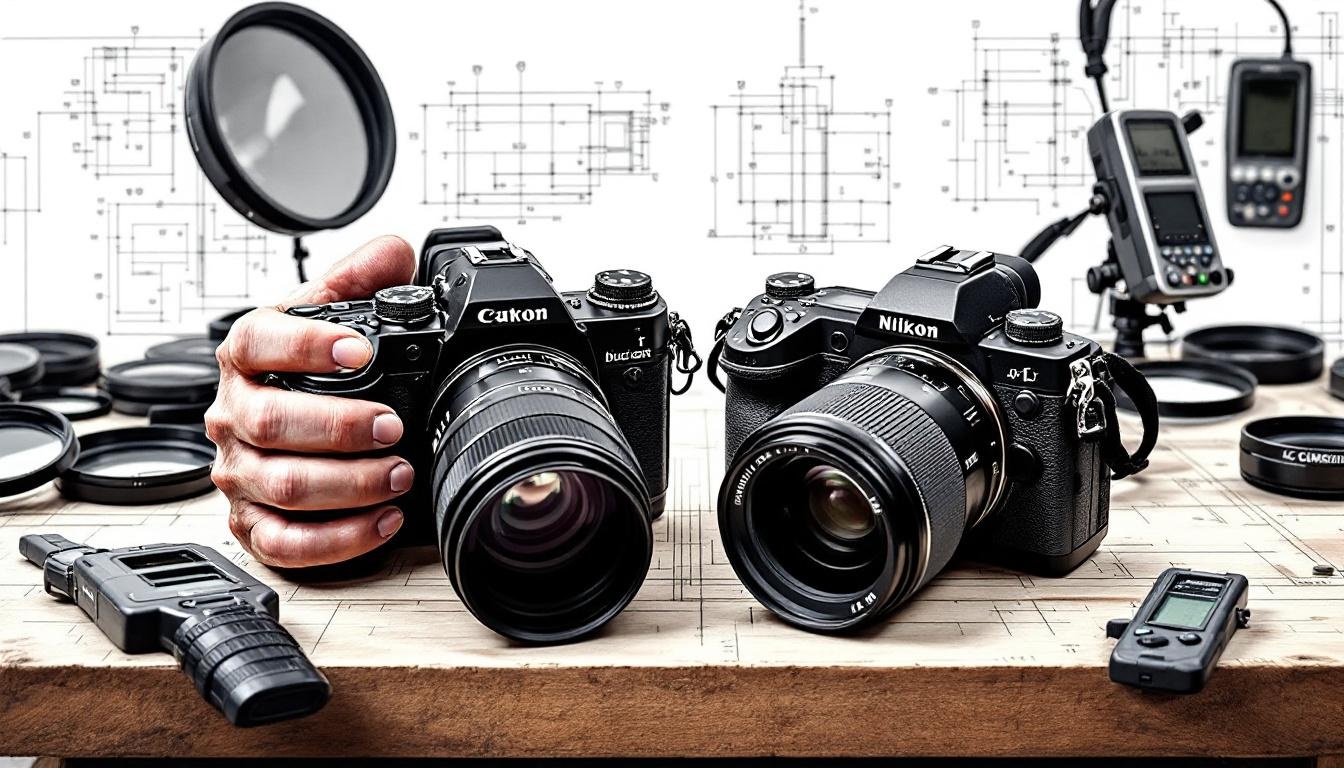
The Canon EOS Rebel series and Nikon D3500 dominate camera store displays for good reason: they deliver sharp images at accessible price points. Yet after six months of shooting, many photographers discover these popular budget bodies systematically restrict creative expression in ways that better glass cannot overcome.
This reality contradicts the common advice that lenses matter more than camera bodies. While lens quality significantly impacts image sharpness and character, fundamental sensor and processing limitations in entry-level cameras create creative constraints that persist regardless of the glass mounted in front.
The Dynamic Range Ceiling That Kills Golden Hour
Budget camera sensors typically capture 8 to 10 stops of dynamic range, compared to 12 to 14 stops in professional bodies. This three-stop difference translates directly to creative limitations during high-contrast lighting situations that often produce the most compelling photographs.
Consider golden hour photography, where the sun creates dramatic contrast between bright skies and shadowed foregrounds. Budget sensors force photographers into binary choices: expose for highlights and lose shadow detail, or expose for shadows and blow out skies. The narrow latitude leaves little room for the exposure flexibility that enables creative interpretation.
The Shadow Recovery Test
Professional cameras allow photographers to underexpose by 2-3 stops and recover clean shadow detail in post-processing. Budget sensors typically produce unusable noise when lifting shadows beyond 1-1.5 stops, severely limiting exposure strategies during challenging lighting.
Source: DXOMark Sensor Testing, 2024This dynamic range limitation particularly impacts landscape and architectural photographers working in humid or dusty environments where weather sealing becomes crucial. The creative constraint compounds with environmental restrictions, as budget bodies often lack adequate protection for challenging outdoor conditions.
Autofocus Systems That Dictate Composition
Entry-level cameras typically feature 9 to 11 autofocus points clustered in the center of the frame, compared to 45 to 61 points covering the full frame in professional bodies. This seemingly technical specification directly impacts compositional creativity.
The limited AF coverage forces photographers to focus-and-recompose for off-center subjects, introducing potential focus shift and limiting spontaneous composition opportunities. Moving subjects become particularly challenging, as the narrow AF coverage cannot track subjects that move toward frame edges.
Professional autofocus systems enable photographers to place subjects anywhere in the frame while maintaining sharp focus, supporting compositional techniques like dynamic symmetry and rule-of-thirds placement without technical compromise. Budget systems effectively push photographers toward center-weighted compositions regardless of creative intent.
The Sports Photography Reality
Budget cameras typically achieve 3-4 frames per second continuous shooting with basic subject tracking. Professional bodies deliver 8-12 fps with sophisticated predictive autofocus, enabling photographers to capture peak action moments that budget systems simply miss.
Source: DXOMark Camera Testing DatabaseHigh ISO Performance and Creative Lighting Freedom
Budget camera sensors produce acceptable image quality up to approximately ISO 1600, with noticeable degradation beyond ISO 3200. Professional sensors maintain clean image quality through ISO 6400 and remain usable at ISO 12800 or higher.
This two-to-three stop advantage in high ISO performance translates to significant creative freedom. Professional cameras enable available light photography in environments where budget bodies require flash or supplemental lighting, maintaining natural ambient lighting and preserving authentic scene character.
The creative impact extends beyond simple light sensitivity. Higher usable ISO ranges enable photographers to maintain faster shutter speeds for motion control while using smaller apertures for increased depth of field. Budget cameras force compromises between these three exposure variables that professional bodies can avoid.
Indoor event photography exemplifies this limitation. Budget cameras often require ISO settings that produce unacceptable noise levels, forcing photographers to rely on flash photography that fundamentally alters scene lighting and mood. Professional bodies capture these environments with available light, preserving authentic atmosphere while maintaining technical quality.
Buffer Limitations and Timing Constraints
Entry-level cameras typically buffer 3 to 6 RAW frames before requiring processing time, while professional bodies handle 20 to 50+ consecutive RAW captures. This difference significantly impacts photographic timing and creative spontaneity.
The small buffer capacity forces photographers to anticipate decisive moments rather than capture them as they unfold. Wedding photographers, wildlife photographers, and street photographers particularly feel this constraint, as they cannot maintain continuous shooting during unpredictable action sequences.
Why the Most Popular Ring Light Size Among Portrait Photographers is Actually Too Small
Processing Speed Reality
Budget cameras often require 2-3 seconds to clear a full buffer and resume shooting, while professional bodies maintain continuous operation through sophisticated processing pipelines. This gap directly impacts creative timing and spontaneous photography opportunities.
Source: Camera Processing Analysis, Photography Industry ReviewBuild Quality and Environmental Creative Constraints
Budget camera construction typically involves plastic components and limited weather sealing, restricting shooting environments and creative opportunities. Professional bodies feature magnesium alloy construction with comprehensive weather protection, enabling photography in challenging conditions that produce unique creative opportunities.
Desert environments with blowing sand, coastal areas with salt spray, and humid tropical conditions all present creative photographic opportunities that budget cameras cannot safely handle. The environmental limitations indirectly constrain creative exploration by limiting accessible shooting locations and conditions.
Temperature extremes similarly impact budget camera reliability. Cold weather reduces battery performance and can affect LCD functionality, while heat can trigger thermal protection shutdowns. Professional bodies typically operate reliably across wider temperature ranges, maintaining creative availability in extreme conditions.
The Lens Compensation Myth
Photography forums frequently suggest that expensive lenses can overcome camera body limitations, but this advice misunderstands how image creation works. While high-quality lenses improve sharpness, contrast, and color rendition, they cannot address fundamental sensor and processing constraints.
A $2,000 lens mounted on a budget camera body still confronts the same dynamic range limitations, high ISO noise levels, and autofocus constraints. The lens may deliver superior optical quality, but the camera body ultimately determines exposure latitude, noise performance, and focus accuracy.
This equipment hierarchy confusion leads photographers to invest in expensive glass while retaining budget bodies, creating an unbalanced system where lens capabilities exceed camera body performance. The result often produces technically superior images within the same creative constraints that initially prompted equipment consideration.
Regional Testing and Upgrade Strategies
Camera rental services in major metropolitan areas enable hands-on comparison between budget and professional bodies before purchase commitment. Testing potential upgrades with personal shooting styles and typical subjects provides objective performance comparison beyond specification sheets.
Regional camera stores often maintain demonstration units for comparative testing, though availability varies significantly between urban and rural locations. Online rental services have expanded access to professional equipment testing, though shipping considerations may limit spontaneous evaluation opportunities.
Photography communities and forums provide regional insights into equipment performance under local environmental conditions. Desert photographers in Southwest regions face different environmental challenges than coastal photographers dealing with humidity and salt exposure.
Upgrade Decision Framework
Professional photographers recommend evaluating current equipment limitations through specific creative scenarios: challenging lighting conditions, moving subjects, environmental constraints, and processing workflow demands. Each limitation category suggests different upgrade priorities and budget allocations.
Source: Consumer Guide Equipment AnalysisMaking the Professional Transition
Upgrading from budget to professional camera bodies requires understanding which technical improvements address specific creative constraints. Photographers primarily working in controlled lighting conditions may prioritize dynamic range improvements over high ISO performance, while wildlife photographers might emphasize autofocus capabilities and buffer capacity.
The transition often involves significant financial investment, typically ranging from $1,500 to $4,000 for professional camera bodies. Regional pricing variations and seasonal sales cycles can impact upgrade timing, though equipment depreciation generally favors consistent quality improvements over perfect timing.
Professional camera bodies also introduce complexity through expanded control options and customization possibilities. The learning curve associated with advanced features can temporarily impact shooting efficiency, though long-term creative benefits typically justify the adjustment period.
Budget camera bodies serve important roles in photography education and casual shooting applications. However, photographers encountering consistent creative constraints that correlate with technical limitations often find that equipment upgrades unlock creative potential that technique improvements alone cannot achieve. Understanding these limitations enables informed decisions about when equipment changes support creative growth rather than simply satisfying acquisition desires.