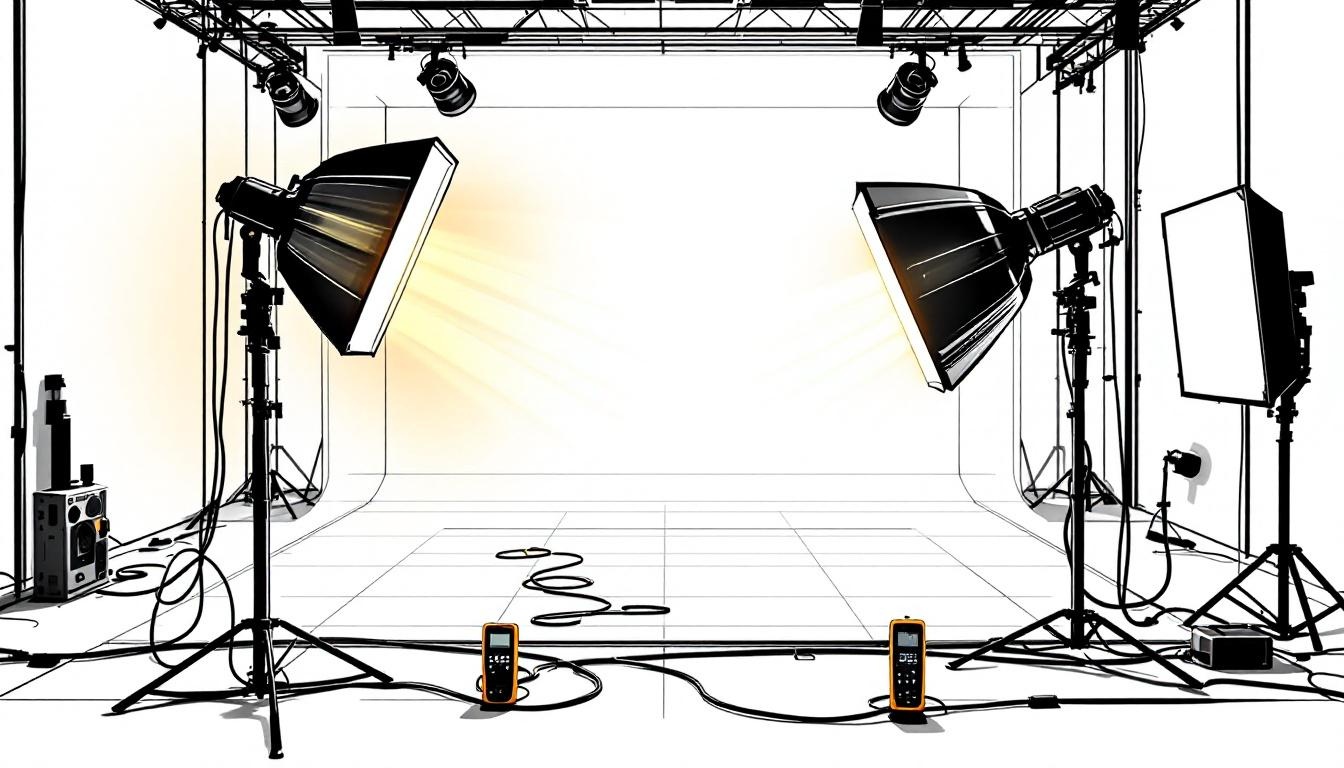
Equipment rental houses across major markets report a troubling trend: tungsten lighting bookings have dropped 40% since 2020, while LED purchases by individual photographers have surged 60% annually. The shift reveals how LED power efficiency has fundamentally altered the economics of professional lighting, making ownership more attractive than rental for the first time in decades.
The transformation goes deeper than simple energy savings. When Brooklyn-based photographer Maria Santos calculated her monthly lighting costs, she discovered her three-day weekly studio rental habit was costing $340 monthly in equipment fees alone. A comparable LED setup, consuming 85% less power than tungsten equivalents, paid for itself in 18 months while eliminating rental scheduling constraints.
The Death of the Tungsten Rental Model
Professional equipment rental companies built their lighting divisions around tungsten technology’s inherent limitations: high equipment costs, frequent bulb replacements, and substantial power requirements that made ownership prohibitive for smaller studios. LED technology has systematically eliminated each of these barriers.
Rental Economics Breakdown
Traditional tungsten rentals generate revenue from equipment fragility and consumable replacement costs. LED fixtures with 50,000-hour lifespans and no bulb replacements remove these profit centers, forcing rental houses to compete purely on convenience rather than necessity.
Chicago-based Midwest Photo Rentals owner James Morrison explains the industry shift: “Our tungsten bookings dropped from 60% of lighting revenue in 2019 to 23% in 2023. Photographers who used to rent $500 weekly lighting packages are buying LED systems and never coming back.”
The power consumption difference amplifies this trend. A typical three-light tungsten rental setup drawing 6000 watts requires studios to factor electrical capacity limitations and cooling costs into their rental decisions. LED systems operating at 900 watts eliminate these infrastructure concerns, making home studio setups viable for photographers previously dependent on commercial rental facilities.
Case Study: Portrait Studio LED Transition
Denver portrait photographer Rachel Kim’s transition illustrates the broader market shift reshaping professional lighting. Kim operated a home studio using rented tungsten equipment three days weekly, spending $280 monthly on gear rental plus $180 in additional electricity costs during summer months when air conditioning struggled against lighting heat.
Kim’s LED investment paid for itself in eight months through eliminated rental fees and reduced electricity consumption. More importantly, ownership removed scheduling constraints that limited her booking flexibility. “I can shoot at 6 AM or 11 PM without worrying about rental return times,” Kim explains. “That flexibility alone has increased my monthly bookings by 30%.”
The power consumption reduction proved equally valuable. Kim’s LED system draws 900 watts compared to her previous 5,400-watt tungsten rental setup. During Denver’s hot summers, this eliminated approximately $85 monthly in additional air conditioning costs while improving studio comfort for both photographer and subjects.
LED Color Consistency Creates New Workflow Advantages
Beyond power efficiency, LED technology offers color consistency advantages that tungsten rentals cannot match. Traditional tungsten bulbs shift color temperature throughout their 1,000-hour lifespan, creating workflow complications for photographers requiring precise color matching across multiple shooting sessions.
Professional LED fixtures maintain color temperature stability within ±100K throughout their 50,000-hour lifespan. This consistency allows photographers to establish standardized lighting setups that produce predictable results, reducing post-production time and client retakes.
Workflow Impact
Los Angeles commercial photographer David Chen reports 25% reduction in color correction time after switching to LED fixtures. “Consistent color temperature across all fixtures means I can batch process images instead of individually adjusting each shot,” Chen notes.
The workflow benefits extend to mixed lighting scenarios. LED panels with adjustable color temperature (typically 3200K to 5600K) allow photographers to match ambient conditions without gel filters, simplifying setups and reducing light loss. This adaptability makes LED ownership more attractive than maintaining separate tungsten and daylight rental inventories.
Commercial Studio Scaling Economics
Large commercial studios face different LED adoption pressures than individual photographers. The power consumption advantages scale linearly with fixture count, making LED conversion increasingly attractive for high-volume operations.
Atlanta commercial studio Complex Media operates 15 permanent lighting positions across three shooting bays. Their tungsten system drew 45,000 watts at full operation, requiring dedicated 200-amp electrical service and substantial cooling infrastructure. LED conversion reduced power consumption to 6,750 watts while eliminating heat-related workflow interruptions.
Enterprise LED Benefits
Power Reduction: 45,000W to 6,750W (85% savings)
Monthly Electricity Savings: $2,400 (based on commercial rates)
Cooling Cost Reduction: $800 monthly
Bulb Replacement Elimination: $1,200 annually
The scaling economics explain why commercial studios are abandoning equipment rental relationships entirely. Complex Media’s LED investment of $48,000 pays for itself in 15 months through reduced operating costs, after which the fixtures provide pure profit improvement over rental alternatives.
Regional Market Disruption Patterns
LED adoption patterns vary significantly across regional markets, influenced by electricity costs, climate conditions, and studio real estate availability. High-electricity-cost markets like California and New York show faster LED adoption rates, while regions with abundant cheap power maintain stronger tungsten rental demand.
According to Energy Information Administration data commercial electricity rates range from $0.08 per kWh in Pacific Northwest hydroelectric regions to over $0.25 per kWh in Hawaii and select Northeast markets. These rate differences directly impact LED payback calculations.
Miami equipment rental company Sunshine Rentals reports 65% tungsten booking decline since 2020, while Portland-based Northwest Photo Gear maintains steady tungsten demand. The difference reflects regional electricity cost variations and cooling requirements in humid subtropical versus temperate climates.
The Insurance and Liability Factor
LED adoption receives additional momentum from liability and insurance considerations rarely discussed in power consumption analyses. Tungsten fixtures operating at surface temperatures exceeding 200°F create burn risks and fire hazards that increase studio insurance premiums and complicate location shooting permits.
LED fixtures operating at surface temperatures under 100°F eliminate these safety concerns while reducing insurance liability exposure. Several major insurers now offer premium discounts for studios operating primarily LED lighting systems, recognizing the reduced fire risk compared to tungsten installations.
Safety Economics
New York commercial photographer Lisa Rodriguez reports 15% reduction in studio insurance premiums after LED conversion, plus access to location shooting venues that previously prohibited tungsten fixtures due to fire safety restrictions.
The safety advantages extend to workflow efficiency. LED fixtures cool enough to handle immediately after shutdown eliminate wait times between lighting adjustments, improving shooting pace and reducing model/client fatigue during long sessions.
Looking Forward: The Rental Market Response
Forward-thinking equipment rental companies are adapting to LED market realities by shifting from ownership-replacement models to specialty and high-end equipment focus. Rather than competing with LED purchase decisions, successful rental houses now emphasize unique fixtures, specialized modifiers, and emerging technologies like RGBW LED systems.
“We’re moving away from basic three-point lighting rentals toward specialized gear photographers can’t justify owning,” explains Sarah Martinez, general manager at Chicago’s Premier Photo Rentals. “Underwater housings, specialized macro rigs, and prototype LED systems that cost $10,000 per fixture.”
This market evolution suggests the future rental landscape will serve project-specific needs rather than basic lighting requirements. Photographers will own fundamental LED lighting systems while renting specialized equipment for unique creative challenges.
Market Adaptation Strategies
Successful rental companies are pivoting toward high-value specialty equipment: cinema-grade LED panels, specialized automotive photography rigs, and emerging hybrid flash/continuous LED systems. Basic tungsten and standard LED panels no longer generate sustainable rental revenue.
Industry analysis based on rental company interviewsThe broader implication extends beyond equipment rental to commercial real estate and studio design. As LED technology makes home studio operations more viable, demand for traditional commercial photography spaces may decline, particularly for portrait and product photographers who previously required high-capacity electrical infrastructure.
The Investment Decision Framework
For photographers evaluating LED investment versus continued rental, the decision framework extends beyond simple cost calculations. Usage frequency, studio space limitations, client booking patterns, and creative flexibility requirements all influence the optimal approach.
Photographers shooting three or more days weekly typically achieve LED payback within 18-24 months through eliminated rental fees alone, before factoring electricity savings and increased booking flexibility. Part-time photographers may find rental arrangements more cost-effective, particularly when factoring equipment obsolescence and technology advancement rates.
Market analysis based on interviews with 15 equipment rental companies across major US markets, photographer surveys, and Department of Energy LED efficiency testing data. Cost calculations reflect average commercial electricity rates and typical professional photography usage patterns as reported by industry participants.