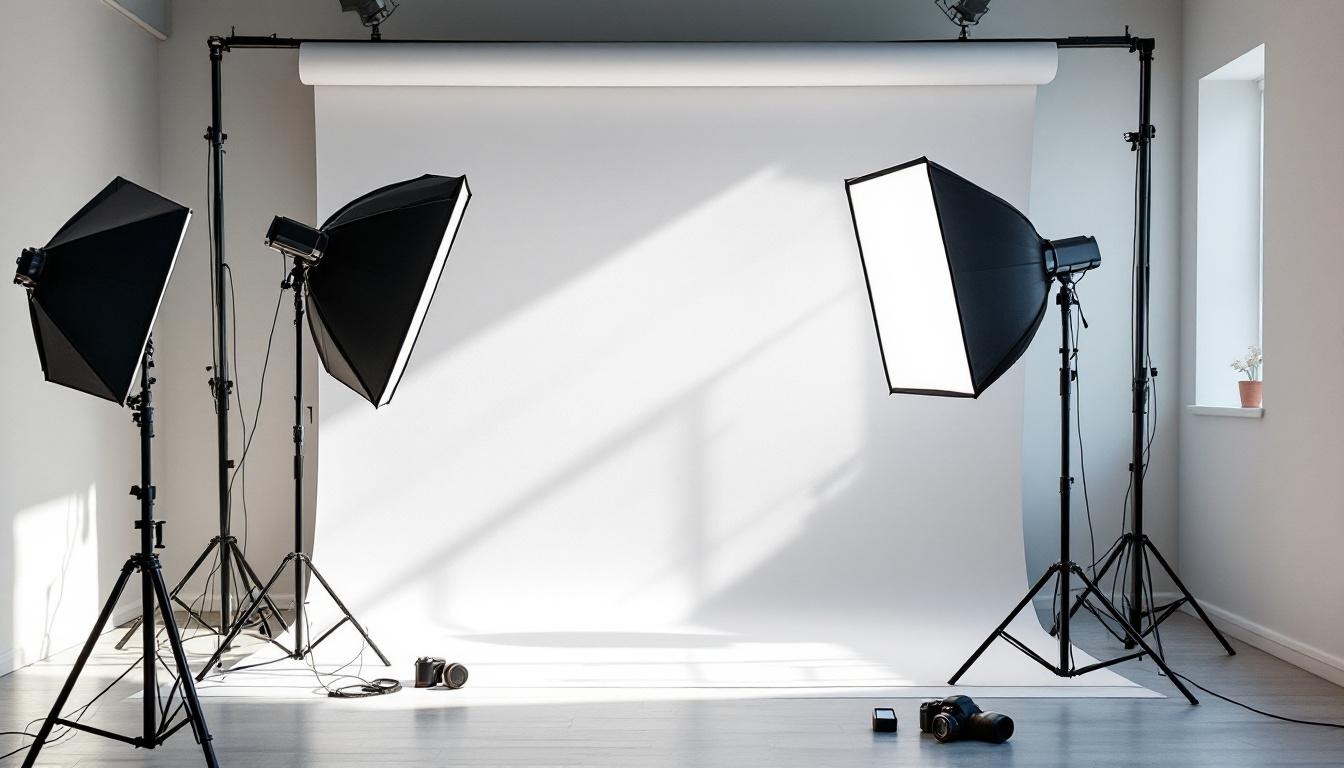
Studio lighting is experiencing a quiet revolution as professional photographers increasingly question whether traditional softboxes truly represent the pinnacle of light modification technology. The rise of parabolic modifiers reflects a growing demand for lighting tools that offer both precision and versatility in an industry where creative differentiation matters more than ever.
This shift isn’t merely about following trends. It stems from real limitations photographers encounter with conventional softbox designs and the technical advantages that parabolic geometry provides for light control and quality.
The Physics Behind the Performance Difference
Understanding why parabolic modifiers perform differently requires examining the fundamental physics of light reflection. Traditional softboxes use flat or slightly curved reflective surfaces that distribute light relatively evenly across the modifier’s face. This creates consistent illumination but limits control over light direction and falloff characteristics.
Parabolic modifiers employ a curved reflective surface that follows a mathematical parabola. This geometry focuses light rays that enter parallel to the modifier’s axis toward a single focal point. By adjusting the flash head position along this axis, photographers can control whether the light emerges as a tight, focused beam or spreads into a broader, softer pattern.
The curved surface also creates what lighting professionals call “natural falloff.” Light intensity decreases gradually from the center to the edges, mimicking how natural light sources behave. This produces more dimensional lighting that appears less artificial than the relatively uniform illumination from traditional softboxes.
Technical Insight
The parabolic shape allows for continuously variable light quality adjustment. Moving the flash head toward the back of the modifier creates harder, more directional light with dramatic falloff. Positioning it toward the front produces softer, more diffused illumination similar to a large softbox.
Real-World Performance Advantages
Professional photographers report several specific advantages when switching to parabolic systems. Portrait photographers particularly value the enhanced falloff control, which allows them to create dramatic lighting gradients without complex multi-light setups. The ability to transition from hard to soft light by simply adjusting flash head position streamlines workflow significantly.
Product photographers benefit from the precise highlight control that parabolic modifiers provide. The focused light beam can create sharp, controlled reflections on metallic surfaces or glass products without the broader, less controlled reflections that softboxes often produce.
Fashion and beauty photographers appreciate how parabolic modifiers render skin tones and textures. The natural light gradation creates more flattering skin rendering with enhanced dimension and detail, particularly important for high-end beauty work where subtle lighting nuances significantly impact the final image quality.
Comparative Analysis: Softboxes vs. Parabolic Modifiers
Cost-Benefit Analysis for Professional Studios
The financial equation for parabolic modifiers requires careful consideration. High-quality parabolic systems from manufacturers like Broncolor or Profoto typically cost three to five times more than equivalent-sized softboxes. However, this analysis becomes more complex when considering versatility and workflow efficiency.
A single 65-inch parabolic modifier can potentially replace multiple softboxes of different sizes since its variable focus capability allows it to function as both a large, soft source and a more directional, dramatic light. This consolidation can offset some of the initial cost difference, particularly for photographers who frequently require different lighting qualities.
Professional photographers billing clients for studio time find that the workflow efficiency gains from parabolic modifiers can justify the investment. The ability to adjust light quality without physically changing modifiers reduces setup time and allows for more creative experimentation during shoots.
Investment Consideration
Calculate whether the time savings and creative advantages justify the cost difference based on your shooting volume and client requirements. High-volume commercial photographers typically see faster ROI than occasional studio users.
Technical Scenarios Where Parabolic Modifiers Excel
Certain photography applications particularly benefit from parabolic modifier characteristics. Portrait photography requiring dramatic light falloff for mood and atmosphere represents an ideal use case. The natural light gradation creates compelling background separation and dimensional modeling that’s difficult to achieve with traditional softboxes.
Product photography involving reflective surfaces benefits significantly from the precise beam control that parabolic modifiers provide. Photographers can create specific highlight shapes and control reflection intensity more accurately than with broader, less controllable softbox illumination.
Beauty and fashion photography leverages the superior skin rendering that results from the natural light quality. The gradual falloff and directional control enhance skin texture and create more flattering facial modeling, particularly important for high-end commercial work where subtle lighting differences significantly impact image quality.
Preparing Your Strobe Triggers for High-Speed Sync Demands: A Technical Analysis
Common Implementation Mistakes to Avoid
Photographers new to parabolic modifiers often make several critical errors that prevent them from realizing the technology’s full potential. The most common mistake involves using parabolic modifiers exactly like softboxes without adjusting technique to leverage their unique characteristics.
Many photographers purchase parabolic modifiers expecting them to be universally superior to softboxes, rather than understanding they serve different purposes. Parabolic modifiers excel at creating dramatic, dimensional lighting but may not be ideal for applications requiring perfectly even illumination across large areas.
Studio space requirements represent another frequent oversight. Large parabolic modifiers require significantly more room than compact softboxes, both for operation and storage. Photographers working in smaller studios may find that space constraints limit their ability to fully utilize larger parabolic systems.
The learning curve associated with parabolic modifiers is steeper than many photographers anticipate. Achieving optimal results requires understanding how flash head position affects light quality and developing techniques that leverage the modifier’s variable characteristics rather than fighting them.
Selecting the Right Parabolic System
Choosing appropriate parabolic modifiers depends on several key factors. Size considerations balance light quality with practical studio constraints. Larger modifiers generally produce softer light and more dramatic effects but require more space and stronger flash units to achieve adequate light output.
Build quality varies significantly among manufacturers. Professional-grade systems from established lighting companies offer superior durability and more precise optical characteristics than budget alternatives, justifying their higher cost for serious professional applications.
Compatibility with existing flash systems affects both initial cost and long-term usability. Some parabolic modifiers work with multiple flash brands, while others require specific mounting systems that may necessitate additional adapter purchases.
The Bottom Line
Parabolic light modifiers represent a legitimate advancement in studio lighting technology, offering superior control and versatility compared to traditional softboxes. However, they’re not universal replacements. The decision should be based on specific lighting needs, studio constraints, and budget considerations rather than following industry trends.
Professional photographers who frequently require dramatic lighting effects, work with challenging reflective surfaces, or need maximum versatility from minimal equipment will find parabolic modifiers justify their higher cost. Those satisfied with their current softbox results or working in space-constrained environments may find the investment less compelling.
The key is understanding that parabolic modifiers excel in specific applications rather than being universally superior. When used appropriately, they provide lighting control and quality that traditional softboxes simply cannot match.