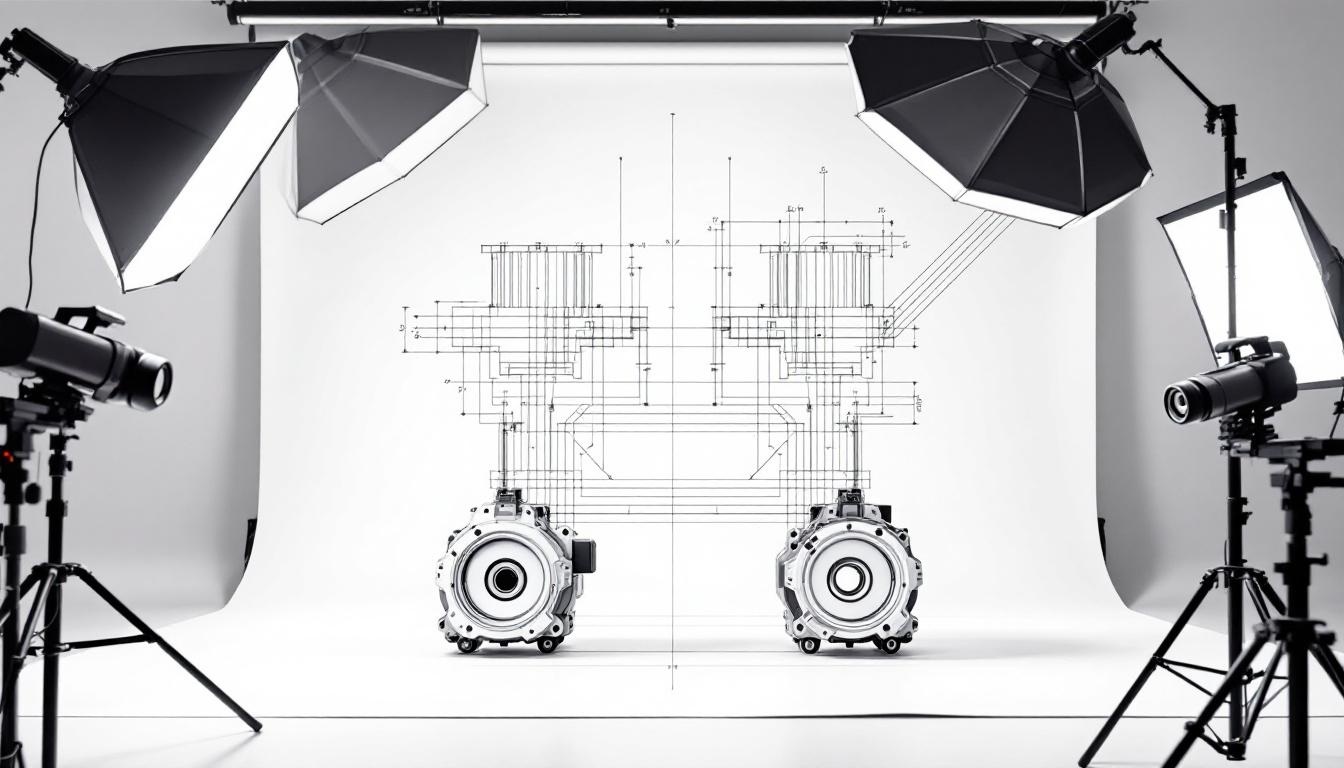
Professional photographers routinely spend $3,000 on macro lenses that fundamentally cannot solve the dimensional accuracy problems they face in product photography, scientific documentation, and technical imaging. The reason is simple: they’re buying conventional optics for applications that require telecentric lens design, then wondering why their measurements are inconsistent and their perspective correction never quite works.
The myth persists because telecentric lenses cost significantly more than conventional photography lenses, often $8,000 to $30,000 for professional systems. This price point makes photographers assume they’re looking at overpriced specialty equipment rather than fundamentally different optical technology. The reality is that telecentric design solves specific physics problems that conventional lenses cannot address, regardless of their quality or price.
The fundamental issue is that conventional macro lenses are designed for image quality, not dimensional accuracy. When you’re doing precision measurement work, perspective distortion that’s invisible to the eye becomes a critical failure mode that no amount of post-processing can truly correct.
Why the Myth of “Good Enough” Conventional Optics Persists
Most photographers encounter telecentric lens recommendations during precision work and dismiss them for three reasons. First, the price differential seems absurd when comparing a $15,000 telecentric system to a $2,000 macro lens. Second, lens manufacturers market conventional macro lenses with terms like “distortion-free” and “clinical sharpness,” implying they handle precision applications. Third, post-processing software promises perspective correction that seems to eliminate the need for specialized optics.
The photography industry reinforces this misconception by focusing on resolution, bokeh, and general image quality rather than dimensional accuracy. Camera manufacturers produce excellent macro lenses optimized for conventional photography applications, then photographers attempt to use them for precision measurement, industrial documentation, and scientific imaging where the fundamental optical design cannot deliver the required performance.
The Actual Physics of Telecentric Optical Design
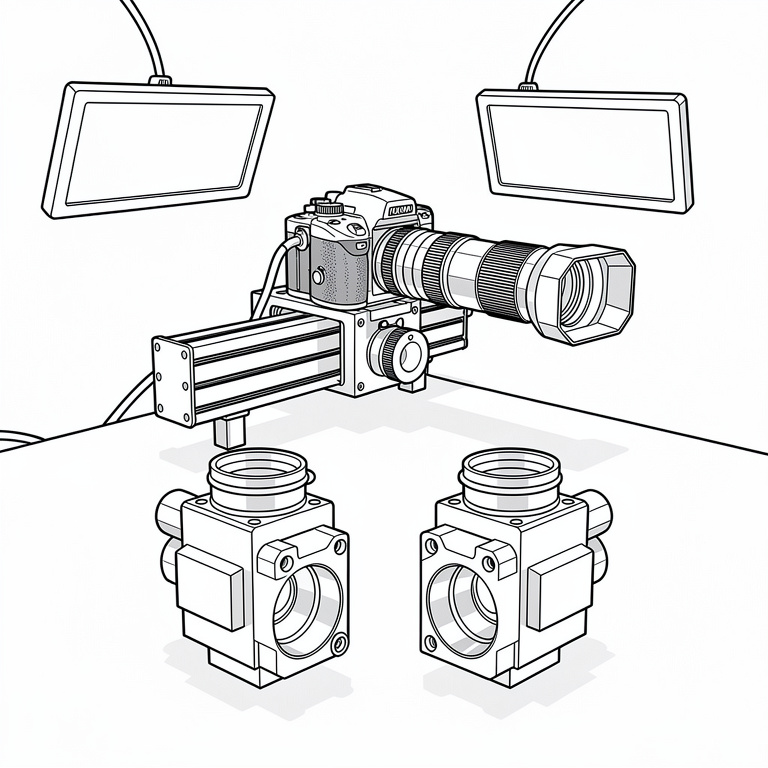
Telecentric lenses eliminate perspective error through a fundamentally different optical architecture. In conventional photography lenses, light rays converge at various angles toward the image sensor, creating the perspective distortion that makes objects appear smaller when farther from the lens. This behavior is desirable for general photography but problematic for dimensional measurement.
Telecentric systems use an aperture stop positioned at the front focal plane of the optical system, forcing all light rays to travel parallel to the optical axis. This parallel ray design maintains constant magnification regardless of object distance within the depth of field. When photographing a cylindrical object, conventional lenses show the top surface smaller than the bottom surface due to perspective. Telecentric lenses show both surfaces at identical magnification, enabling accurate dimensional measurement.
The optical complexity requires significantly larger front elements and more sophisticated lens formulas. A telecentric lens designed for the same field of view as a conventional macro lens needs front elements roughly three times the diameter. This size requirement, combined with the precision manufacturing tolerances needed for parallel ray geometry, directly explains the cost differential.
Companies like Edmund Optics manufacture telecentric systems with magnification accuracy specifications of ±0.1% across the entire field of view. Conventional macro lenses, even premium models from Canon or Nikon, show magnification variation of 2-5% from center to edge due to their inherent optical design.
Real-World Applications Where Telecentric Design Matters
Telecentric lenses are essential in semiconductor inspection, where measuring circuit feature dimensions to tolerances of micrometers requires constant magnification. Automotive quality control uses telecentric systems to verify part dimensions during manufacturing, where perspective distortion could cause acceptable parts to be rejected or defective parts to pass inspection.
In medical device photography, telecentric optics document surgical instruments an
d implants with dimensional accuracy required for regulatory compliance. The parallel ray design ensures that measurements taken from photographs match physical measurements, something impossible with conventional optics regardless of their quality.I see photographers constantly trying to solve optical problems with software solutions. The marketing around ‘distortion-free’ macro lenses creates unrealistic expectations for precision applications where millimeter accuracy matters more than pixel peeping.
High-end product photography increasingly relies on telecentric systems when dimensional accuracy matters for catalog applications. Jewelry photography, watch documentation, and precision component imaging benefit from the consistent magnification that eliminates the size distortion inherent in conventional lens design.
The Cost of Believing Conventional Lenses Are Sufficient
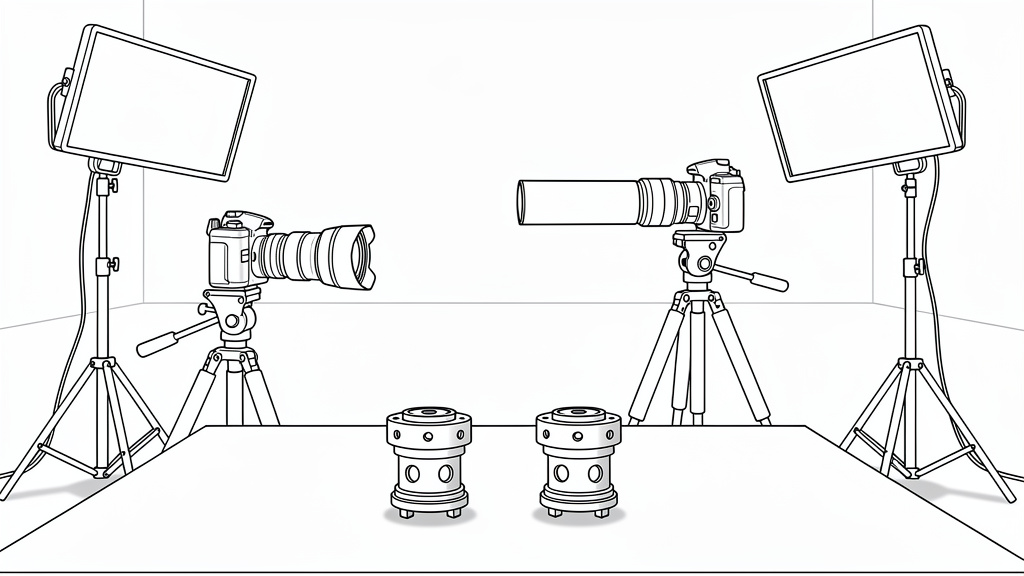
You’re documenting precision components for a quality control application. Your $3,000 macro lens produces sharp, detailed images that look perfect until the dimensional measurements are checked. Parts at the edge of the frame measure 3% smaller than parts at the center due to perspective distortion. Your measurement software cannot compensate because the distortion varies with object height and position within the three-dimensional field.
The engineering team rejects your photographic measurement system, requiring physical measurement of every component. What was supposed to be an automated documentation process becomes manual inspection, costing weeks of delay and thousands in additional labor. The conventional lens that seemed economical becomes expensive when it cannot perform the required function.
Understanding the Technical Specifications
Telecentric lens specifications include parameters absent from conventional photography lenses. Telecentricity angle, typically specified in degrees or milliradians, indicates how closely the system approaches true parallel ray geometry. Professional telecentric lenses achieve telecentricity angles below 0.1 degrees, while conventional lenses have effective telecentricity angles of 5-15 degrees due to their convergent optical design.
Object-space telecentric lenses maintain constant magnification as objects move closer or farther from the lens within the depth of field. Image-space telecentric lenses ensure that the sensor position does not affect magnification, critical for applications where precise mechanical positioning is difficult. Bi-telecentric lenses provide both benefits at higher cost and complexity.
The Professional Photographers of America educational resources cover conventional optics thoroughly but rarely address telecentric applications, leaving photographers unprepared for precision imaging requirements they encounter in industrial and scientific applications.
Making the Investment Decision
The argument against telecentric lenses is straightforward: they cost significantly more than conventional optics and have limited applications outside precision measurement. This argument is valid for general photography where perspective distortion is aesthetically desirable or irrelevant to the final use.
The problem is that applications requiring dimensional accuracy look identical to general macro photography until measurement precision becomes critical. By then, the conventional lens investment becomes a sunk cost, and the telecentric system becomes a necessary additional purchase rather than a planned optical choice.
Professional telecentric systems from manufacturers like Schneider Kreuznach and Sill Optics typically cost $8,000 to $30,000 depending on magnification, field of view, and optical performance specifications. This investment makes sense when dimensional accuracy has value: quality control applications, scientific documentation, industrial inspection, and precision measurement photography.
For photographers working primarily in portraiture, landscape, event, or general commercial applications, conventional optics remain the appropriate choice. The key is recognizing when your applications cross into precision territory where telecentric design becomes necessary rather than optional.
- Telecentric lenses use parallel light ray design to maintain constant magnification, eliminating perspective distortion that conventional lenses cannot avoid
- The higher cost reflects larger front elements and complex optical formulas required for parallel ray geometry, not premium pricing for equivalent performance
- Applications requiring dimensional accuracy in photography need telecentric optics; post-processing correction cannot compensate for three-dimensional perspective errors
- Professional telecentric systems cost $8,000-$30,000 but become necessary investments when measurement precision has value in industrial, scientific, or quality control applications